Every reliable machine starts with its engine.
A drilling rig is only as dependable as the power source driving its hydraulics. When we designed the T1000, GTC Compact and GTC 80, we needed engines that start on cold mornings, hold steady under changing drilling loads and keep running on sites far from the grid. That is why all three run on Vanguard commercial engines by Briggs & Stratton.
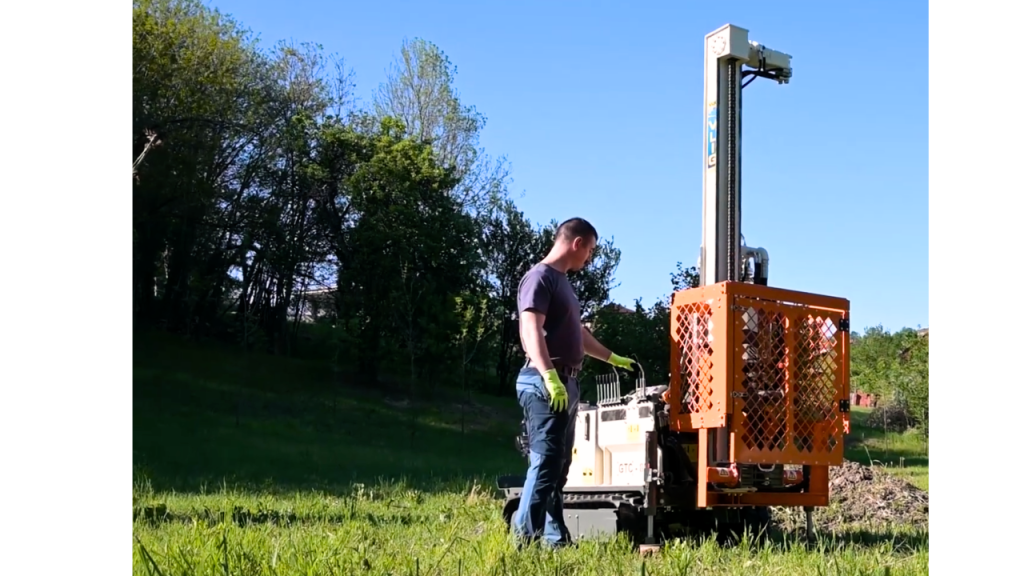
On a VLIG rig, the engine does not turn the drill directly. It drives a hydraulic unit, and oil lines carry that pressure up to the distributors on the mast. Rotation torque, pullback force and feed pressure all depend on how steadily the engine holds its speed while the load keeps changing, from soft clay to a gravel layer to rock under a DTH hammer.
Our customers drill water wells, geothermal loops and geotechnical boreholes in places where grid power is unreliable or simply not there. They asked us for a machine that runs without electricity, refuels from a jerry can and still fits through a backyard gate. A diesel unit in this power class would have made the rig too heavy to carry and set up by hand. Petrol made sense, but only with an engine built for long hours under load rather than for a garden tool.
We compared several options and chose Vanguard for three reasons: the reputation of Briggs & Stratton in commercial equipment, a service network we can rely on in the region, and a power range wide enough to cover our whole petrol line.
“Strikes the perfect balance for us in terms of power, weight, and cost.”
Igor Bačanin, CEO of VLIG, on the Vanguard 400
Vanguard EFI replaces the carburettor with an Engine Control Module that reads sensor signals and adjusts fuel and spark for every cycle. Paired with Electronic Throttle Control (ETC), a flywheel speed sensor detects changes in RPM and tells the throttle body to correct them before the operator notices. For drilling, that means the hydraulic pumps get steady power when the bit hits a harder layer, instead of the engine sagging and recovering.
lower fuel consumption than a carburetted equivalent, depending on working conditions
chokeless starting in all temperatures, so early winter jobs start without a fight
automatic compensation when the same rig works lowland wells and hillside sites
better resistance to stale fuel for machines that sit between seasonal jobs
less routine maintenance and lower emissions than a carburetted engine
The GTC Compact and GTC 80 run on the Vanguard 400 EFI/ETC. The GTC 80 can also be fitted with the 23 HP Vanguard V-Twin.
POWERED BY
Vanguard 400 Low Profile
Single-cylinder OHV, 408 cc, 14 HP, low-profile air cleaner
The low-profile air cleaner keeps the engine height down, so the power unit sits lower on the frame and fits through tight openings. TransportGuard shuts off fuel and ignition together for transport, and cyclonic filtration runs 600 hours between filter changes.
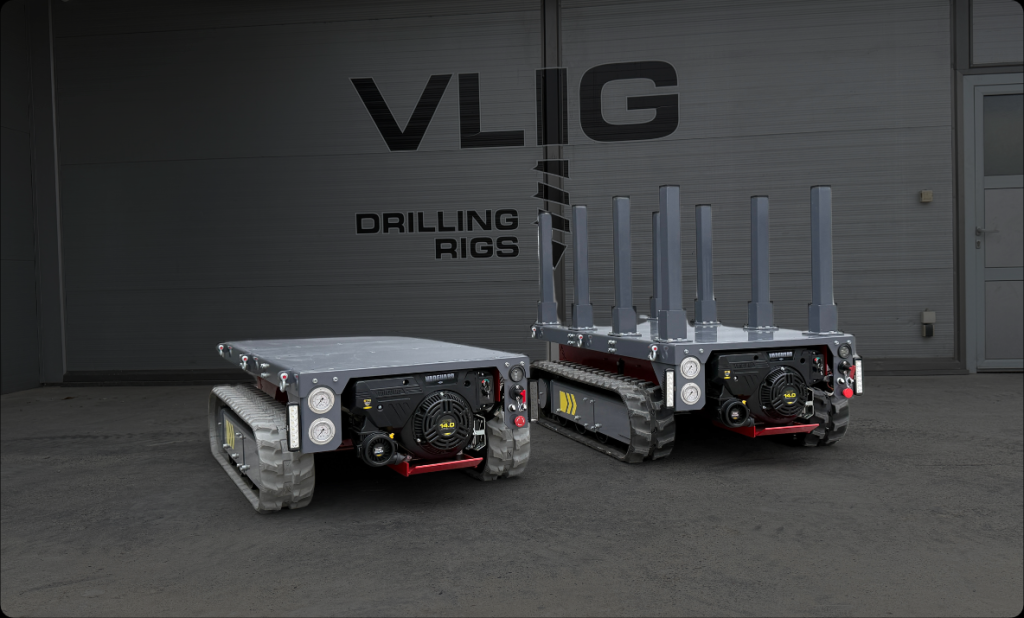
POWERED BY
Vanguard 400 EFI/ETC
Single-cylinder OHV, 408 cc, 14 HP, electronic fuel injection and throttle control
Head torque: 750 Nm
Max depth: 80 m
Max diameter: 200 mm
Mast and power unit travel separately, so the rig fits in a van and sets up in courtyards and narrow urban plots. EFI/ETC holds rotation steady when the bit meets a harder layer, starts without a choke and uses up to 25% less fuel than a carburetted equivalent.
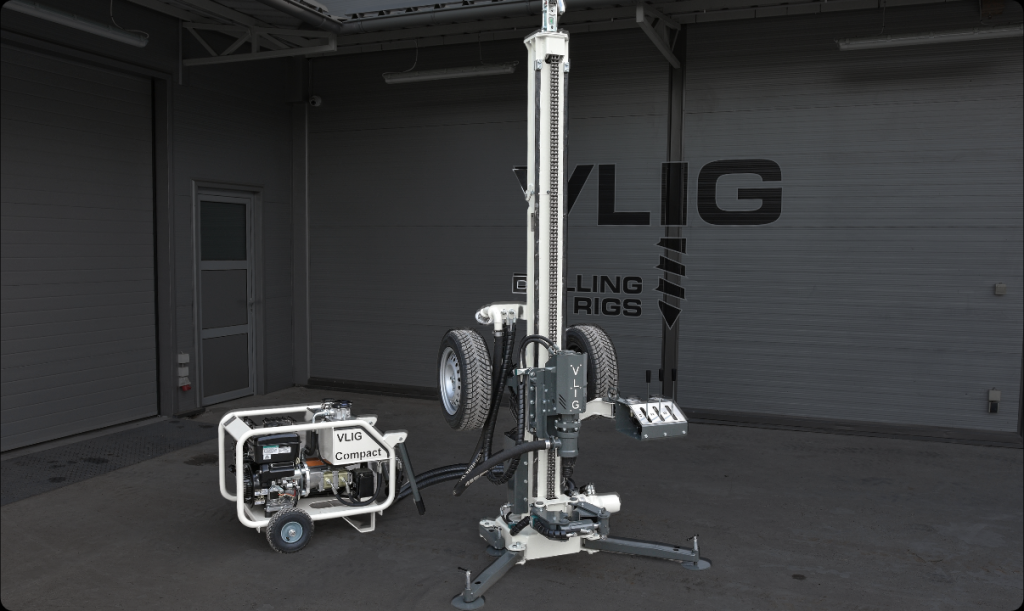
POWERED BY
Vanguard 400 EFI/ETC or Vanguard 23 HP V-Twin
14 HP single-cylinder EFI/ETC, or 23 HP V-Twin, 627 cc (model 3864)
Head torque: 750 to 1000 Nm
Max depth: 80 to 100 m
Max diameter: 200 to 250 mm
Two power options on one tracked chassis. The 400 EFI/ETC covers standard water wells, while the 627 cc V-Twin gives the extra torque and pullback for 100 m wells and 250 mm holes.
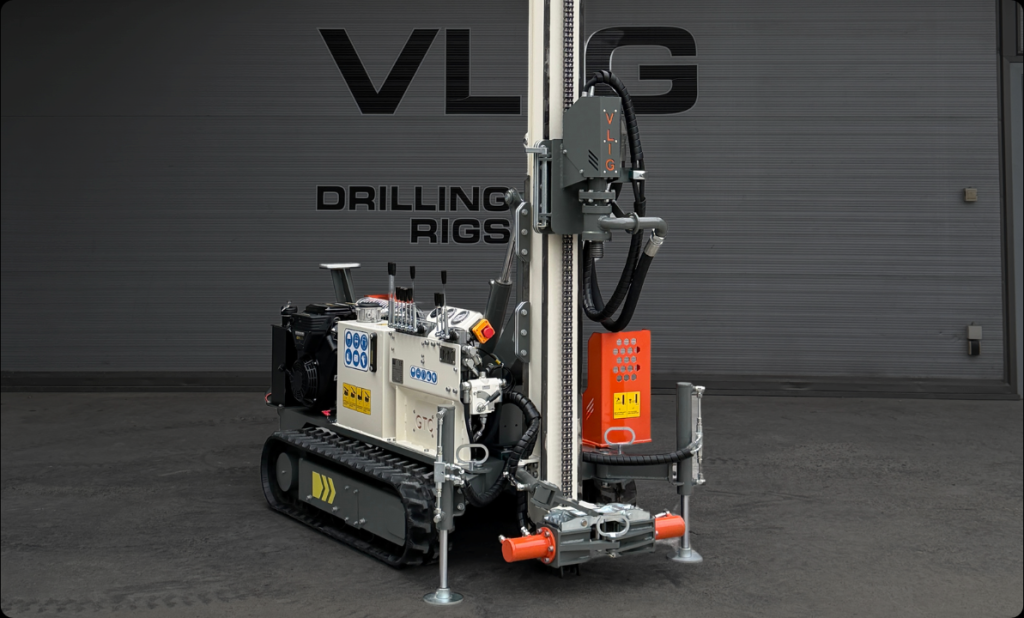
Vanguard gives a 3-year global commercial warranty on its engines. Registered Vanguard 400 single-cylinder engines get one extra year, four years in total.
The GTC 100 is our diesel model and uses a Kubota Tier V engine, built for 150 m depth and 300 mm diameter.
POWERED BY

FEATURED BY VANGUARD
Tomas Mika, Regional Sales Manager CEE & Balkans, Briggs & Stratton
Briggs & Stratton published a case study on how VLIG developed the GTC Compact around the Vanguard 400.
Tell us what you drill, how deep and where. We will recommend the GTC model and engine setup that fits the job.